
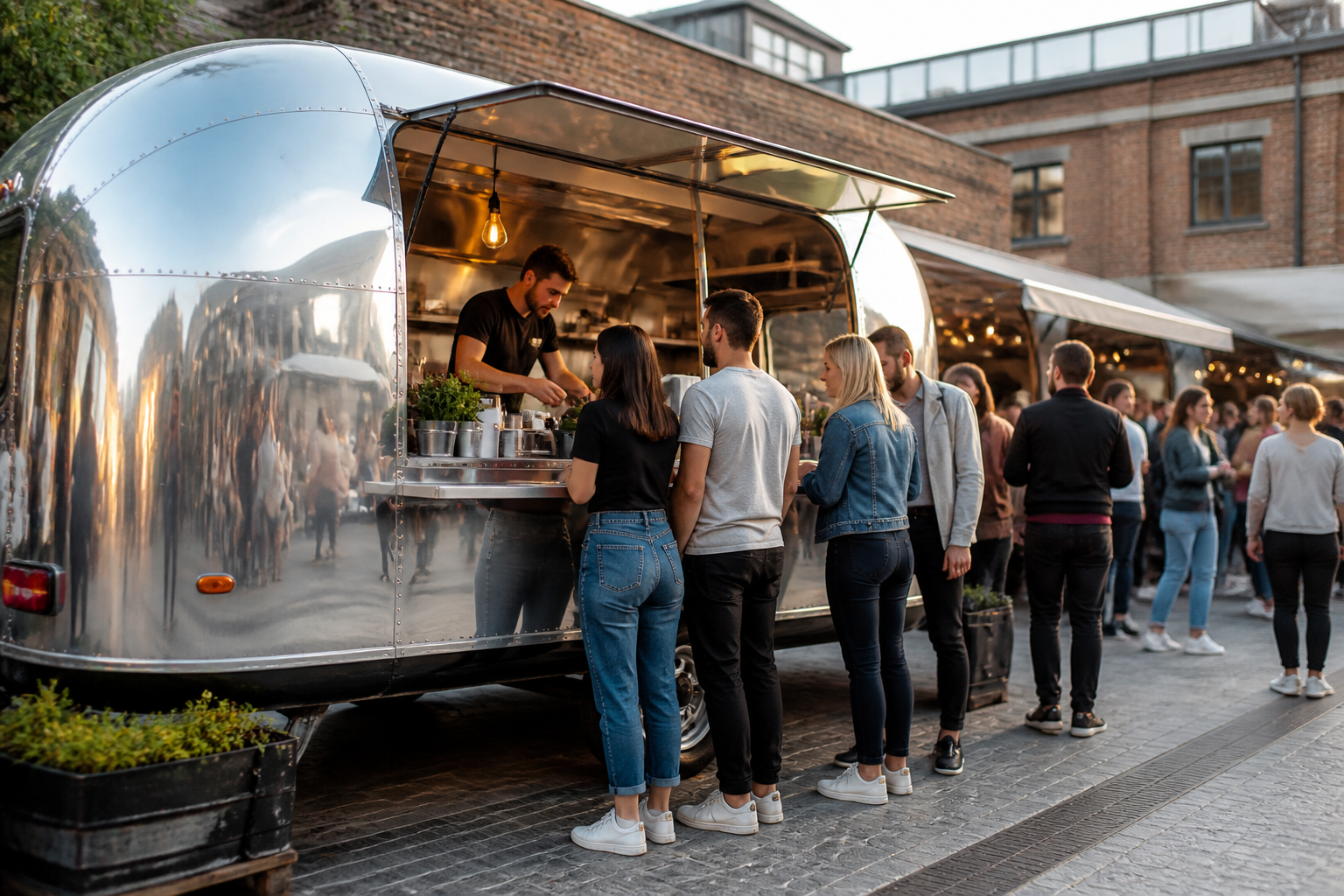
Most UK street food traders already know how to run a tight operation. The food is good, the pitch is consistent, the margins are managed. But something has shifted in the past few years, and the traders feeling it most are those watching customers walk straight past a perfectly serviceable setup to queue for the gleaming, curved trailer at the other end of the market. Airstream catering trailers from Bistro Trailers are rapidly transforming how food is served on the streets, becoming visual shorthand for something worth stopping at, something worth photographing, something worth telling people about. That is not a superficial trend. It reflects a genuine change in how British consumers relate to food experiences, and it has real implications for pricing, event bookings and brand partnerships.
This article unpacks those implications: why the aesthetic works so powerfully on UK audiences, how it changes the way people behave at your pitch, and how working with Bistro Trailers for hire or supply gives operators a practical route into that premium tier.
Why the look instantly signals a premium street food experience
The visual cues are specific and they work quickly. The curved, streamlined silhouette breaks immediately from the boxy anonymity of a standard box trailer, and the polished aluminium skin catches light differently at every hour of the day, making the unit look alive and considered. The retro Americana feel carries associations that UK audiences have absorbed through decades of film, advertising and travel culture: open roads, adventure, a certain unhurried confidence. Together, these cues trigger something closer to escapism than hunger, and people feel they are stepping into something curated, something that exists slightly outside the ordinary rhythm of the high street.
From a brand psychology standpoint, that reaction is enormously useful. A highly distinctive unit acts as a physical logo, anchoring your concept in memory before a customer has tasted a single thing. The shape alone becomes associated with your offer, which is an advantage no amount of signage on a generic trailer can fully replicate. Critically, the aesthetic reads as investment: when the unit looks like care and money have gone into it, artisan coffee, craft cocktails, tasting plates and chef-driven menus feel like natural extensions rather than overpriced indulgences.
Major hospitality and lifestyle brands have learned this too, increasingly choosing this style for hero activations, which means festival-goers and social media users across the UK are now conditioned to associate the silhouette with standout experiences. That association benefits independent operators who adopt it just as much as it benefits large brands.
From queue to photoshoot: how trailers change customer behaviour
The shift in behaviour is observable and consistent. Where a standard catering setup prompts a quick transaction, a design-led vintage-style trailer prompts people to stop, take in the unit, and decide to make a moment of it. Customers film their approach, pose at the hatch and capture the reflections shimmering across the aluminium, framing wide shots that include the whole setup as backdrop. The unit is not just a source of food; it is the location.
In UK street food culture, where festivals and markets are documented as lifestyle content rather than just lunch, this matters enormously. A design-led trailer gives visitors an attractive, shareable backdrop that encourages tagging, story posts and word-of-mouth that no paid advertising budget can replicate with the same authenticity. The operational impact follows directly: longer dwell time and a relaxed, treat-oriented mindset make customers more receptive to premium menu items, add-on drinks, desserts and tasting flights. Volume throughput matters less when average transaction values are higher and margins reflect the perceived occasion rather than a perceived commodity.
There is also a self-reinforcing social dynamic at play. Eye-catching photos draw more people over, and a queue forming around a beautiful unit reads as validation. That perceived popularity in turn supports higher price points, because scarcity and desirability are powerful signals that consumers respond to instinctively.
The commercial edge: pricing, bookings and brand partnerships
A design-led trailer does not change the core menu, but it reframes what that menu is worth. Customers who might hesitate at a £6 flat white from an anonymous setup will pay it readily, and feel good about it, when the context signals quality and intention. That shift from bargain positioning to occasion spend is where the commercial return on a premium unit becomes most tangible.
The event and private booking market is where this pays off most visibly. Wedding couples, estate venue managers and corporate away-day planners are actively looking for visually impressive hero units that enhance the look of their event and feature naturally in their own marketing photography. A polished, curved trailer fits that brief in a way a standard box simply does not. Festival organisers at the higher end of the circuit now treat the visual quality of their food offering as part of their ticket-selling proposition, which means a distinctive unit often secures not just a pitch but a better pitch, in a better location, at a better day rate.
Brand collaborations follow the same logic. Lifestyle, fashion and drinks brands seeking pop-up activations or experiential campaigns need a vehicle that looks cohesive with their visual identity, and a polished retro-styled trailer is almost by definition on-brand for that world in a way that requires minimal additional theming. The cost of a premium unit is real, but when deployed strategically across the UK season, combining regular trading with weddings, festivals, corporate work and brand activations, the payback period shortens considerably.
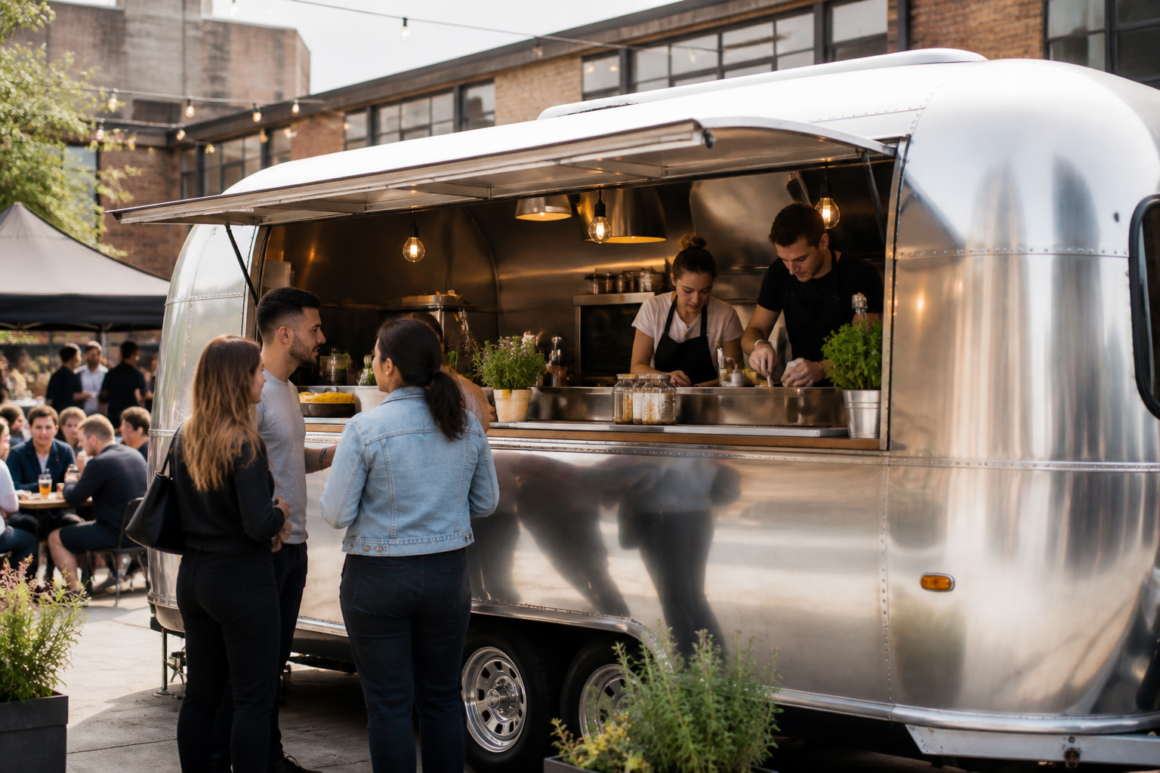
Beyond the shine: fitting out an for serious food service
The aesthetic appeal only holds if the operation behind it is credible. A beautiful exterior that conceals a cramped, poorly planned interior will undermine both the experience and the reputation quickly. The good news is that the elongated footprint and curved walls of a classic barrel-style trailer, when planned properly, support genuinely efficient service layouts, with clear zones for prep, cook, plate and pass, and two to four staff moving without clashing.
Equipment positioning, extraction, refrigeration and dry storage all need to be specified around the actual menu and service style, not retrofitted as an afterthought. The same applies to the interior details that bridge function and experience: lighting that flatters food and faces, hatch height set for comfortable service and natural eye contact with the customer, integrated menu displays and point-of-sale that feel considered rather than bolted on, and surface finishes that photograph well but wipe clean at the end of a long festival day. UK-compliant hand-wash provision, proper ventilation and durable food-safe surfaces are the baseline for operating legally and comfortably across back-to-back events.
Bistro Trailers understands that the interior specification is where a trailer earns its keep. Working through equipment selection, service flow and branding with a supplier who holds both aesthetic and operational knowledge means the finished unit trades as well as it looks, which is the only version of the investment worth making.
Tapping into the UK scene: -style trailer hire or purchase through Bistro Trailers
The range of UK settings where a polished, retro-style unit is now expected rather than simply admired is telling. Major music festivals, headline pitches in city street food markets, coastal summer pop-ups, winter light-trail concessions and wedding or estate bookings all represent contexts where the trailer becomes part of the event’s identity rather than just a vendor within it. At each of those settings, the unit does marketing work simply by existing and drawing its own crowd.
The decision between hiring and buying comes down to where an operator sits in their business journey. Hiring a premium retro-style unit for a key season, a new concept launch or a specific campaign is the lower-risk route: it lets traders test premium positioning, observe how customers respond and build the booking history that justifies a larger commitment. Purchasing makes sense once the concept, the route and the demand are established, because ownership removes hire costs and allows deeper customisation to a specific brand.
Practical considerations are worth planning for early. Budget and footprint go hand in hand; Bistro Trailers offer units ranging from 3.5 m to 7 m in length, so matching the size to typical UK pitch dimensions and access routes is a genuine first-step conversation. Branding and menu display can be refreshed across different deployments without a full re-skin each time, which keeps ongoing costs proportionate. Custom build lead times need to align with the UK festival and wedding booking cycles, meaning decisions made in autumn translate into units ready for the following spring season. Gas and electrical installations are built to full UK regulations as standard, so compliance is covered from day one.
Bistro Trailers supports both routes. Whether the immediate need is short-term hire of a premium-style catering trailer or a fully custom build specified to a particular brand, menu and trading style, practical guidance on timelines, compliance and what to prioritise first is part of the service. For traders who know the food is good and are ready to let the presentation reflect that, this is the most direct path into the premium end of the UK street food scene.
